
Welcome to GridFree Solar

Australia’s Trusted Solar Panel, Battery and Rebate Experts

Installations Done
230 +
Happy Families
543 +
Rebates Claimed
34
Customers Rated
151

Our services

Smarter Energy. Bigger Savings.

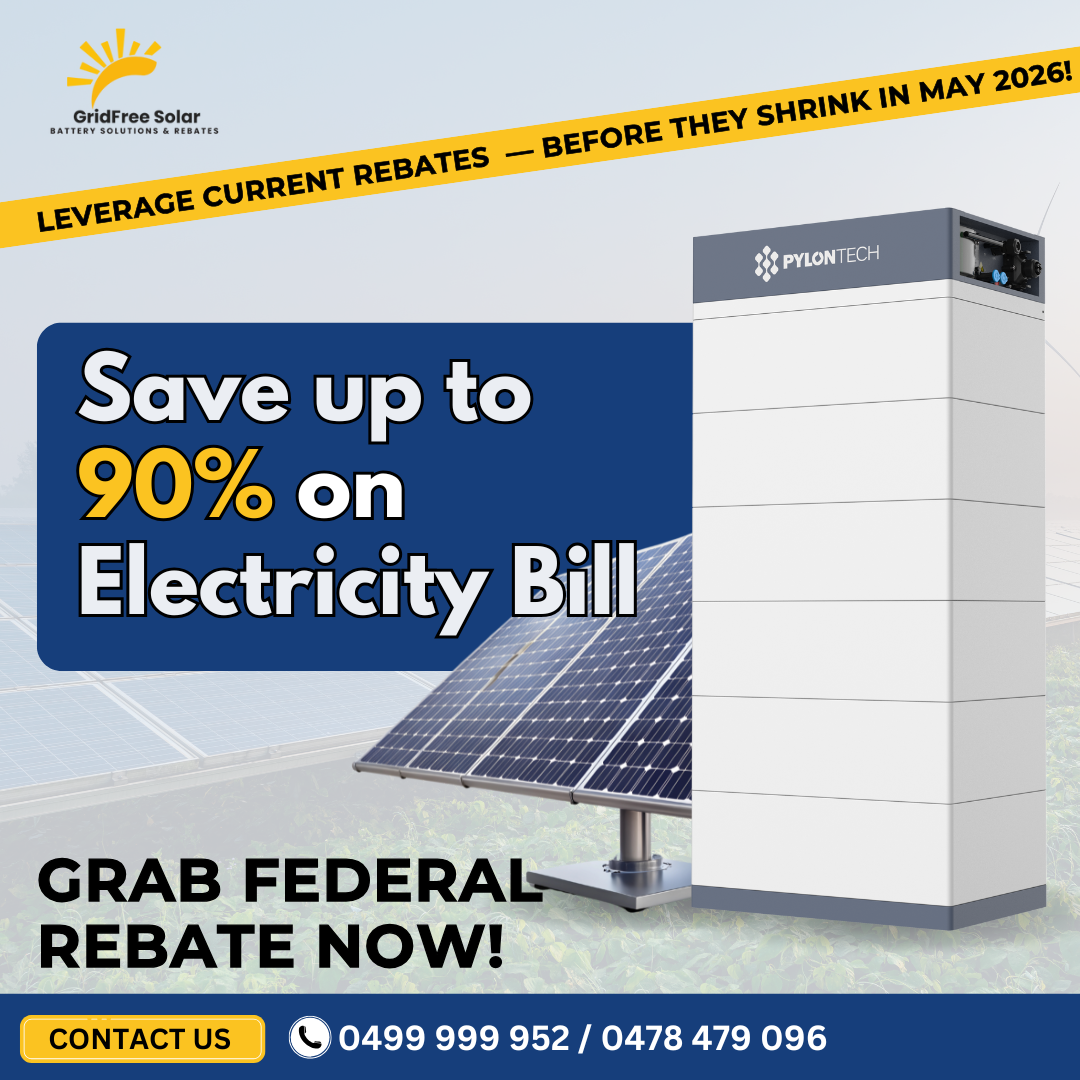
90% electricity savings federal rebate with gridfree solar

About us

Victoria's Most Trusted Solar Panel and Battery Specialists

Welcome to GridFree Solar — your trusted partner for solar installation, battery storage and rebate-claims in Melbourne.

Our Story
Founded with a mission to make sustainable, affordable energy accessible, GridFree Solar combines expert technical know-how with genuine customer service. We realised that while many homes in Victoria install rooftop solar panels, most of the solar energy they generate is exported to the grid or lost. By adding a battery storage system, you keep that energy for yourself — using it at night, on overcast days or during peak pricing periods. That means far lower power bills, and more control. We also navigate the complex world of rebates and government incentives for you.

Our Vision

We believe in a future where every home in Melbourne truly owns its energy – producing it, storing it, using it smartly and even earning from it. At GridFree Solar, we’re making that future accessible today.

Store Your Solar Energy

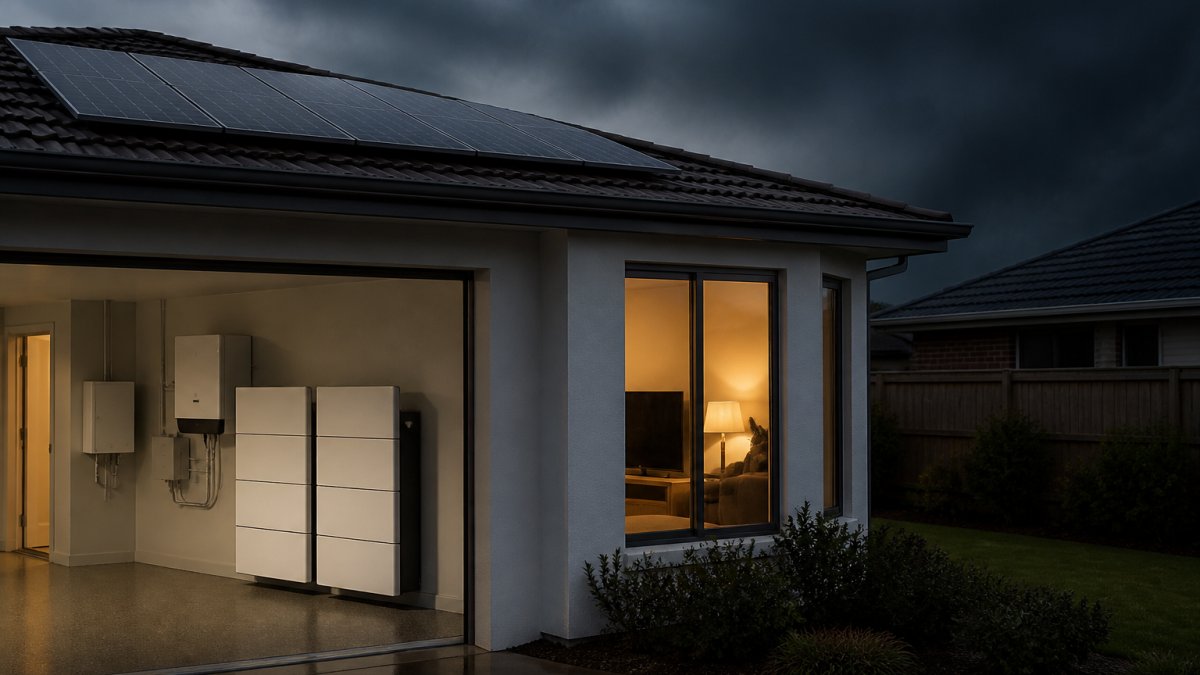
Store extra solar power during the day to use at night, less reliance on the grid.

Save your hard earned dollars

Lower your electricity bills by utilising stored energy during peak times.

Gain Energy Independence

Keep your lights on during outages with reliable backup power.
Our latest process

Our Work Process

Site Assessment & Custom Design

We begin by evaluating your location, and power usage to design the most efficient solar battery setup for your home or business. Every GridFree system is engineered to deliver maximum output and savings — no cookie-cutter plans here.

Installation & System Integration

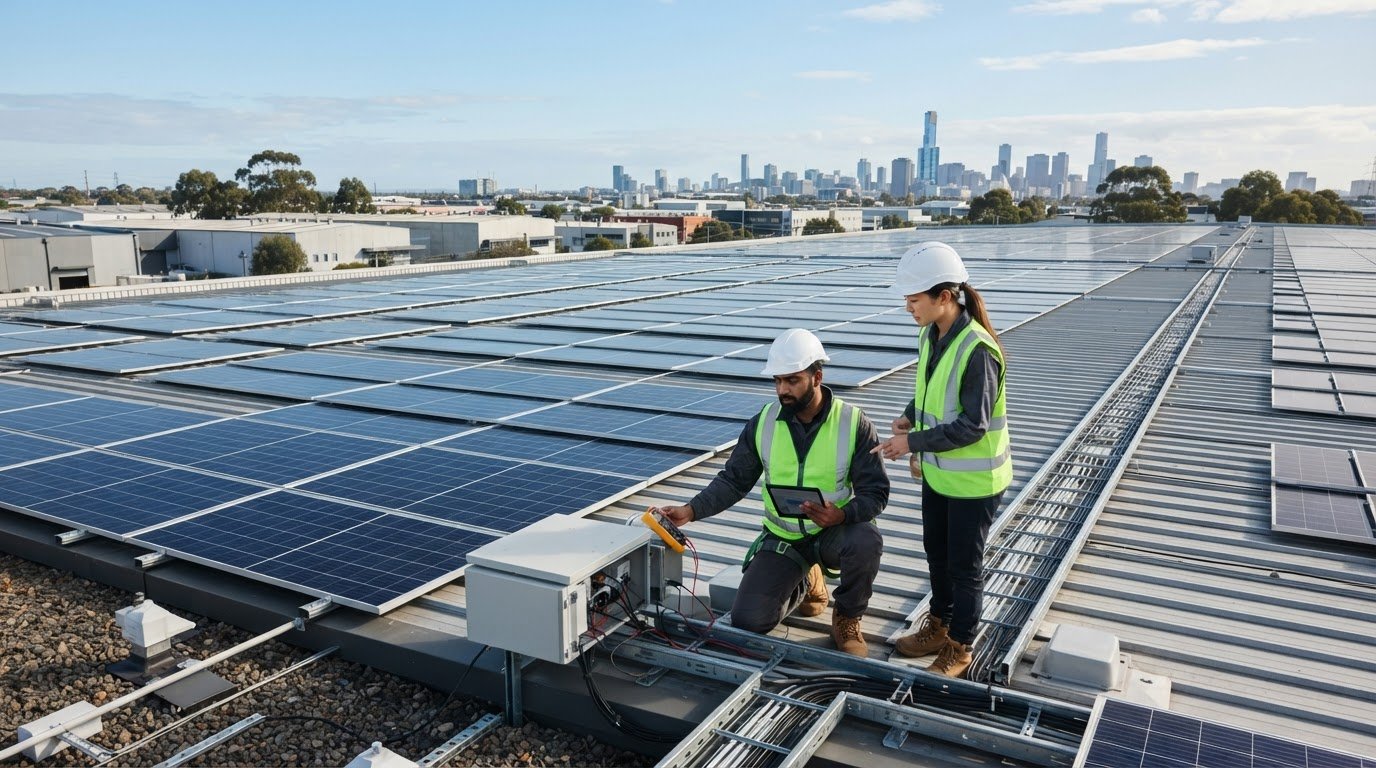
Our certified installers handle the entire process — from battery placement to inverter setup — ensuring a clean, safe, and high-performance installation. Your battery system is setup for seamless power backup and energy independence.
Activation & Aftercare

Once live, your GridFree system starts generating power instantly. We monitor performance remotely and offer lifetime support, so you stay worry-free and in control of your energy future.
WHY HOMEOWNERS CHOOSE US?

Avail Government Rebate
Receive up to $16,800 in government rebate when you install a 42kWh battery system — a valuable asset for your home. You pay as little as $5,500, which is just a quarter of the full cost.

Get rewarded every day by joining our VPP plan

  • Free grid charging from 11am–2pm
  • $1 daily bonus for avoiding grid use during peak hours
  • Earn 15¢/kWh by exporting power back to the grid from 6–8pm

With a larger battery, you don’t have to charge or drain it fully each day. Keeping the battery between 40% and 60% charge helps it last much longer — up to four times longer than normal.

With a typical electricity price difference of $0.40/kWh, and 20kWh daily usage, customers save around $8 per day — most recover their investment in under 2 years.

Energy progress

Best Solutions for Your Solar Energy

At GridFree Solar, we bring together innovation, efficiency, and sustainability — empowering Melbourne homes to take full control of their energy future. From top-tier solar panels to intelligent hybrid systems, every solution is designed for maximum savings and performance.

Solar Panels
95%
Battery Storage
85%
Hybrid Energy Systems
75%

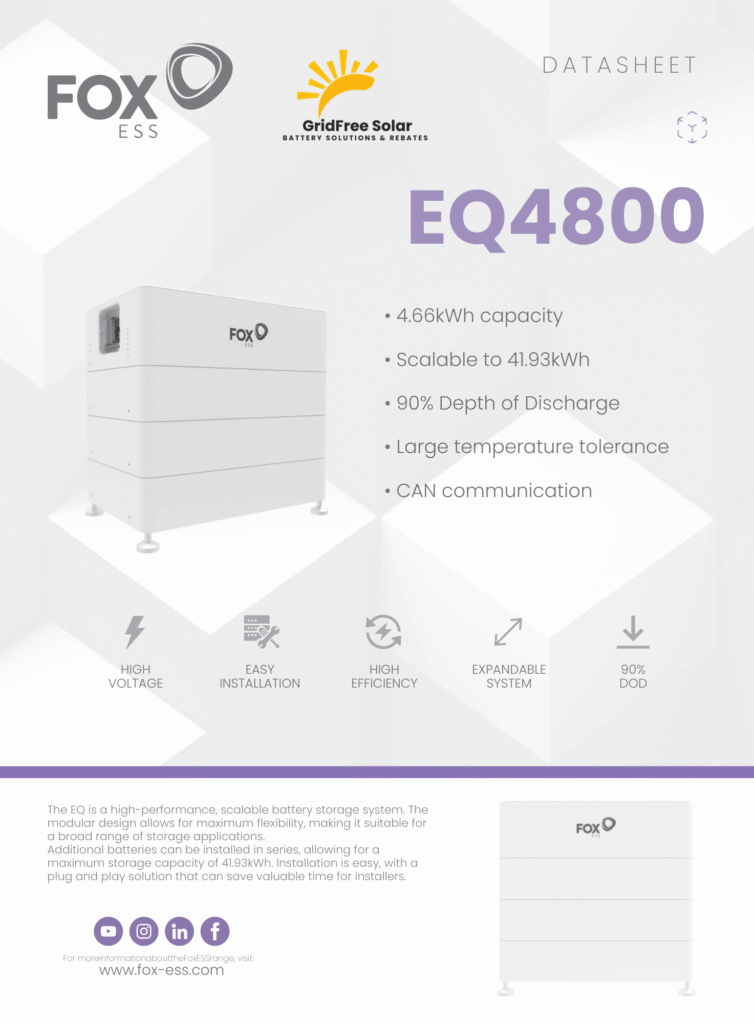
WHY CHOOSE OUR BATTERIES?

Lower fire risk

Proven LiFePO₄ Chemistry

Safest, most thermally stable battery chemistries with lower fire risk and better heat tolerance than alternatives. 

8,000+ Cycles

Long lifespan and cycle life

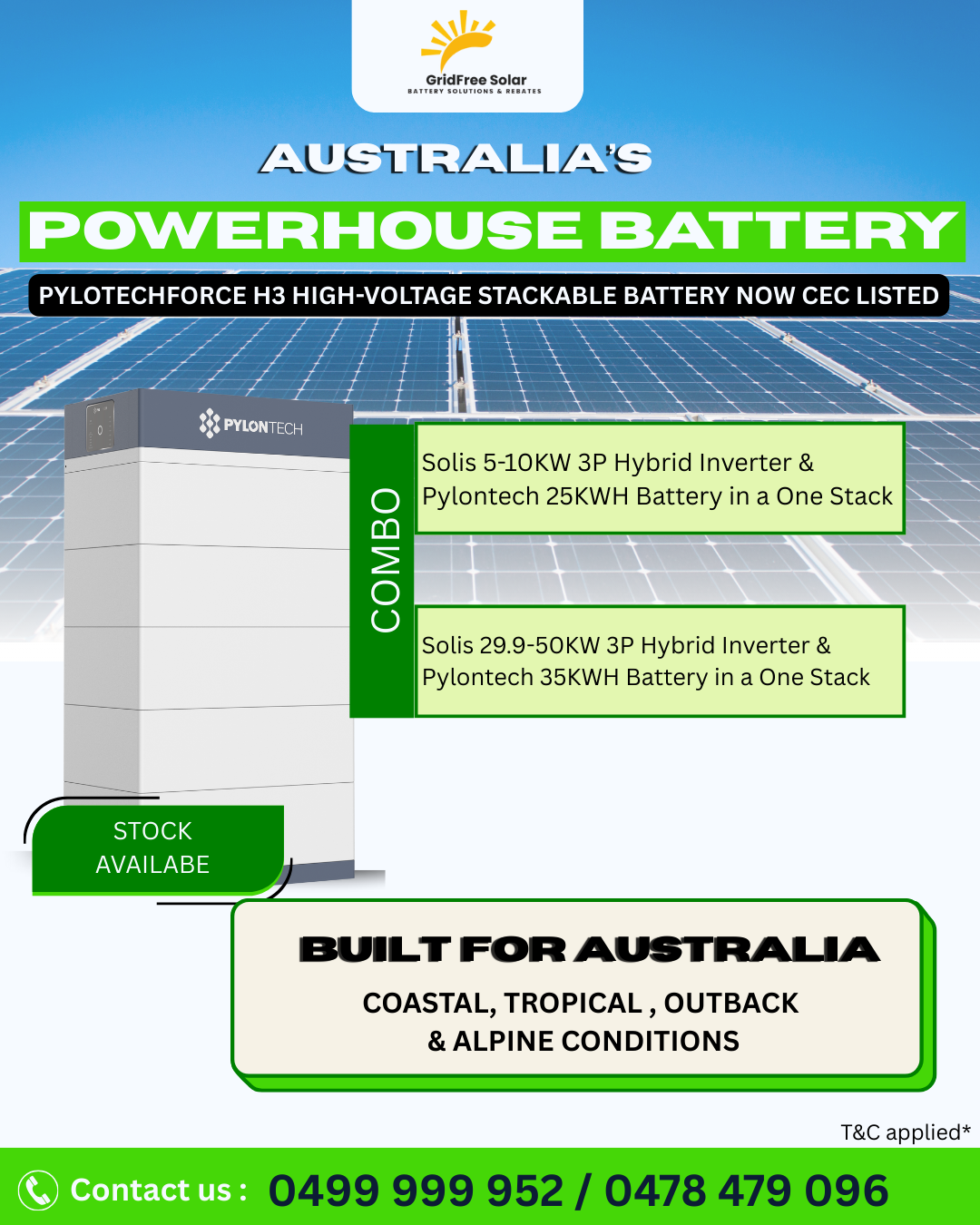
Our models are engineered for 8,000+ cycles and 15+ year design life, making them cost-effective over time.

100%

Modular, Scalable Design

Batteries can be stacked and expanded easily as your energy needs grow, from small residential setups to larger commercial systems. Scalability means you don’t have to overspend upfront.

99%

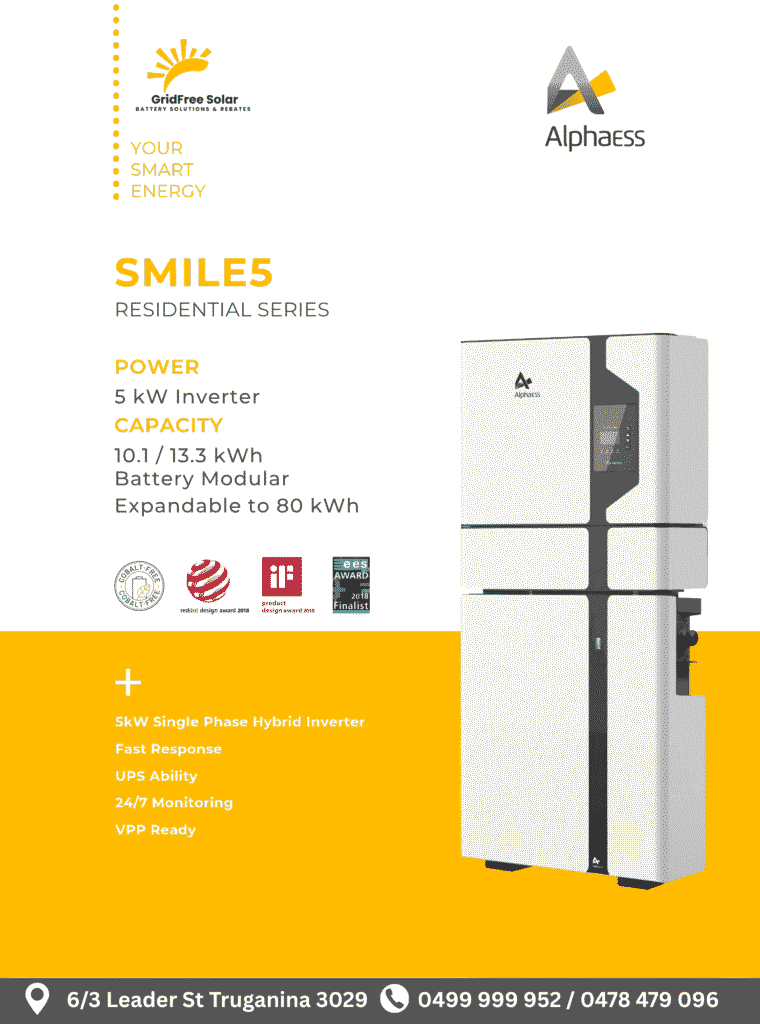
Broad Inverter Compatibility

Compatible with many hybrid inverters and controllers commonly used in Australian solar systems, supporting retrofit or new installations without proprietary inverter lock-in.

99.6%

High Efficiency & Usable

High depth of discharge (DoD) and efficient charge/discharge performance mean more of your generated solar energy is stored and used rather than wasted.

100%

Intelligent Battery Management

Integrated BMS safeguards against over-charge/discharge, over-current, and temperature extremes, protecting battery health and extending service life.

Have Questions? We’re Here to Help!

Our solar experts are just a call or message away. Whether you’re curious about solar panel installation, battery savings, rebates/subsidies, or incentives — we’ll guide you every step of the way.

WHY CHOOSE US

Providing Solar Battery Solutions That Empower Your Homes

Tailored Solar Battery Solutions

Every home and business is different — and so is every GridFree system. We design solar battery setups customized to your energy goals, budget, and space for maximum performance and savings.

Trust & Long-Term Warranty

With GridFree, you get more than solar — you get assurance. Our premium components come with manufacturer-backed warranties and performance guarantees for lasting peace of mind.

High Quality Workmanship

Our certified technicians follow strict safety and quality standards for every installation. Clean lines, optimal angles, and flawless connections — built to perform and made to last.

24×7 Support & Monitoring

We don’t stop after installation. Our team continuously monitors your system and offers round-the-clock support — so you’re never left in the dark, literally.

Solar calculator

Check If You’re Eligible for a Government Solar Rebate

Why Choose GridFree Solar Batteries?

🐨 Australian Compliance

  • Clean Energy Council (CEC) Approved Battery
  • CEC Accredited Installer
  • AS/NZS 5139:2019 – Battery Installation Standard
  • AS/NZS 3000 & Related – Wiring Rules
  • Certificate of Electrical Safety (CES)
  • Grid Connection Approval
  • Federal Incentive Program Compliance

🐨 Australian Compliance

  • UN38.3 – Lithium Battery Transport Safety
  • IEC 62040-1 – Electrical Safety for UPS Systems
  • CEEW or Equivalent – Issue a certificate confirming the system meets electrical safety regulations.
  • Bundled Installation with Solar PV — For STC eligibility, the battery must be installed with a solar PV system (new or existing) and meet configuration and capacity requirements (5–100 kWh).
  • New Photo Compliance Requirements (from March 1 2026) — Installers must take geotagged, timestamped photos of key labels and signage during installation for regulatory compliance documentation.
  • Written Documentation to Consumer — Retailers and installers must provide clear written statements covering system details, installation compliance, and consumer protections under Renewable Energy Regulations and Australian Consumer Law.
  • As per Victorian Electrical Safety Laws
  • Work Health & Safety (WHS) compliant

Recent articles

The GridFree Knowledge Hub

WHAT OUR CUSTOMERS SAY

Our bills were just getting impossible Between the air con, the kids, and working from home, it felt like energy was eating our income. The team showed us how to access the rebates, cut the system price, and get everythinginstalled quickly.
Mike & Ava's Family
⭐⭐⭐⭐⭐
Our old bills was -$1120 After Federal Rebates, New bill is $32 Annual saving - $4352 ROI - 1.8 years. "Our Grid free Solar system now powers everything - day & night from AC to the washing machine"
Zen Philips
⭐⭐⭐⭐⭐
We chose a 13 kW solar system with a 40kWh battery, perfectly sized for our home. Discovered the 2025 Solar & Battery Rebate Program - saving nearly 30% off the total system price. They handled everything - rebates, paperwork, install.
Zen Clarke
⭐⭐⭐⭐⭐

FAQ

Panels convert daylight to DC power, which an inverter turns into usable AC electricity; surplus can charge a battery or export to the grid. Output drops on cloudy days (design around annual averages, not one sunny day), and panels don’t generate at all after dark — you draw from a battery if you have one, otherwise the grid.

Panels typically carry long performance warranties, but compare three separate things: the product warranty, the performance warranty, and the installer’s workmanship warranty.

Base sizing on annual consumption, daytime load, roof space, tariff, and future plans (EV, heat pump, battery) rather than a generic number. 6.6 kW suits some homes, but electrified or high-demand households often need more.

Usable roof area, panel wattage and layout determine capacity. North-facing roofs often maximize annual output; east/west can spread generation across the day. South-facing isn’t automatically ruled out — model it. Shading from trees, chimneys or vents should be assessed, not assumed.

Approval requirements vary by council, network and property type — your provider should confirm these. Rentals can proceed with owner consent; strata/apartment installs usually need Owners Corporation approval and a clear allocation plan; new builds may face different rebate eligibility, so confirm before signing.

Future expansion depends on inverter limits, export limits and roof layout — check compatibility upfront. Solar may improve buyer appeal, but treat bill savings, not resale value, as the core business case.

Most inverters include a monitoring app; ask whether it tracks whole-home consumption, not just generation. Panels usually just need occasional rinsing from rain, with cleaning only if soiling or performance issues justify it.

A standard grid-connected system shuts off in an outage for safety — backup requires compatible battery/inverter equipment and a designed backup circuit. Solar can offset an air conditioner, EV charging (ideally with smart charging), or a pool pump when run during sunny hours.

Self-consumption is solar power used at home rather than exported; the feed-in tariff is what retailers pay for exports. Since import prices are usually much higher than feed-in rates, using solar directly is generally worth more than exporting it.

Savings depend on generation, daytime usage, tariff, exports, weather and future prices — always use a conservative written estimate. A proper estimate needs 12+ months of bills, tariff details, interval data if available, and expected future loads.

Payback period is net upfront cost divided by estimated annual savings — a screening tool, not a full financial analysis. Quotes vary because installers assume different tariffs, export rates, degradation and consumption profiles; compare assumptions line by line.

eigh total finance cost against conservative savings estimates — a low monthly repayment doesn’t prove good value. Compare quotes on system size, brand/model, inclusions/exclusions, warranties and install scope, not price alone.

No — a low feed-in tariff just makes self-consumption more valuable (load shifting, batteries, efficient appliances help). Eliminating your bill entirely isn’t reliable, since fixed charges, night use and seasonal variation can persist.

Output declines gradually over a panel’s life — use manufacturer warranty terms rather than assuming zero degradation. Post-install costs can include switchboard work, meter changes, repairs, monitoring fees or battery replacement.

Distributors may cap how much you can export, affecting inverter and battery settings (this cap can also be “dynamic,” varying with network conditions). Your retailer’s import/export rates and time-of-use structure can materially change outcomes — model any tariff switch using real usage data.

Get assumptions in writing, test high/medium/low scenarios using your own bills, and separate incentives from ongoing savings. Savings are never guaranteed — weather, usage and tariffs all vary, and warranties don’t equal savings guarantees.

The best size fits your load, roof and network constraints — not simply the largest option. An EV or heat pump can boost ROI if scheduled to run during solar hours, increasing self-consumption.

Look at manufacturer track record, warranties, local support and site suitability for both panels and inverters. Premium components are worth it only when justified by site needs, warranty terms or service — not marketing alone.

A standard inverter converts DC to AC; a hybrid inverter is designed to also work with a compatible battery. Microinverters sit at each panel (useful for complex/shaded roofs); optimisers manage panel-level performance in certain layouts — compare cost and serviceability for each.

Neither is universally superior — choose a proven, compatible, well-supported system. You should receive written warranties covering panels (product and performance), inverter, battery, and workmanship, with clear claims contacts for each.

Clarify the retailer’s after-sales process, manufacturer contacts and installer responsibilities before buying. A proper site visit is strongly preferable for complex homes or battery installs; remote designs should still verify photos and switchboard details.

Older or full switchboards may need upgrading for safety or compliance before connecting solar/battery equipment. A smart meter may also be required for exports, tariff changes, or battery optimisation — check your retailer/distributor’s process.

Competent installers use proper mounting/flashing and should offer roof warranty coverage for penetrations. Most solar-only jobs take a day; batteries, switchboard work or approvals can extend the timeline.

Expect a quote, contract, system design, datasheets, warranties, certificates, commissioning records and monitoring access. Commissioning is the final testing/configuration process confirming safe, correctly configured operation.

Verify licences/accreditation, insurance, reviews and complaint handling. Treat any sales channel the same way — get a written quote, check credentials, confirm cooling-off rights, and avoid pressure to sign on the spot.

Manufacturer warranties can survive, but workmanship support becomes harder — this is why retailer stability and documentation matter. All work must meet applicable Australian standards, network rules and electrical regulations.

A battery stores surplus solar for evening use, cuts grid imports, and can provide backup if designed for it — but compatibility depends on your existing inverter, battery type and switchboard, so not every battery will work with your setup.

AC-coupled batteries often suit retrofits; DC-coupled can be more efficient with a compatible hybrid inverter — site-specific design decides. Size using interval consumption data, evening demand, tariff and outage priorities, not just to chase a rebate; compare usable capacity, not nominal capacity.

Only if specifically designed for whole-home backup with adequate inverter power — many systems back up selected essential circuits (lighting, fridge, internet) instead. Some compatible systems can even recharge from solar while islanded during daylight.

Some batteries can charge from the grid depending on settings, tariffs and program rules. Yes — bill savings from storing and timing solar use are separate from any backup function.

Compare warranty years, throughput and retained capacity, not cycle count alone. Usable capacity does decline over time — check what retention the warranty promises.

Location is constrained by manufacturer instructions, fire safety and standards (garages are often possible with the right clearances). Properly selected, installed and maintained batteries are designed to be safe — don’t compromise on installer quality or placement.

Sometimes — check model compatibility, expansion limits and whether matching modules stay available. Replacing an old inverter can make sense if it’s near end-of-warranty, undersized, or incompatible with the battery.

Usually yes, since surplus is stored before being exported. Batteries can make financial sense with high evening use and low feed-in rates — run a conservative case and value backup separately from bill savings.

A Virtual Power Plant coordinates participating batteries, potentially offering payments or credits in exchange for dispatch rights. Before joining, read the contract carefully for payment terms, exit fees, control rights, reserve levels and warranty impact.

Yes, if sized and configured to discharge during high-price periods. Power rating (kW) determines what loads it can actually run — a big kWh capacity with low kW output may not cover everything — and your interval data is essential for correctly sizing and valuing the system.

Solar Homes offers a PV rebate up to $1,400 (50% of eligible cost after STCs) plus an optional interest-free loan up to $1,400, repaid over four years, generally requiring installation within 120 days of approval. Eligibility broadly requires combined taxable household income under $150,000, property value under $3 million, owner-occupier status, and no solar at the property in the prior 10 years (separate landlord pathways exist). There is currently no standalone Victorian state battery rebate.

It’s an STC-based upfront discount for eligible battery installs, typically applied through the installer’s quote and generally not income-tested. From 1 May 2026, the STC factor is 100% for the first 14 kWh, 60% for capacity from 14–28 kWh, and 15% for capacity from 28–50 kWh — with eligibility based on installation date, not contract signing date.

It offers zero-interest loans up to $15,000 (repayable over up to 10 years) for eligible households with combined taxable income up to $210,000, covering rooftop solar and household batteries among other upgrades. It’s still a loan requiring repayment — not free money — and targeted discounts up to $4,000 have also been flagged for lower-income/concession households and renters (with landlord permission), subject to current program rules.

Some incentives may stack, but never promise this without checking the specific customer, address, equipment and application pathway. Before signing, confirm: exact system design, quote validity, incentive assumptions, eligibility, installation timing, finance terms, warranties, exclusions, and backup/grid design — and keep documentation (bills, interval data, ID, ownership/consent) ready.